
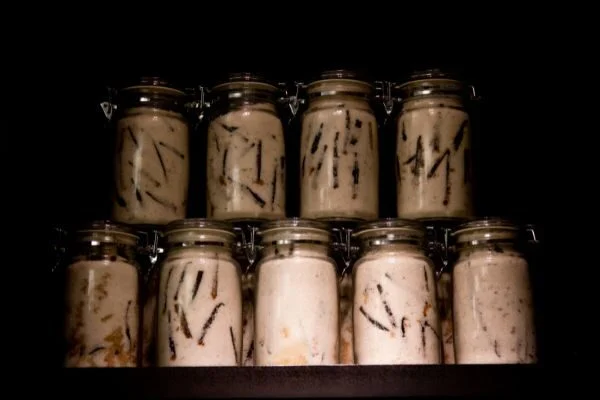
Industrial rum ferments in twenty-four to forty-eight hours. We take fourteen days, at controlled temperature, and the difference is not patience for its own sake — it is chemistry that needs time to happen.
A fast ferment converts sugar to alcohol and stops. A slow one lets yeast and the bacteria that live alongside it build carboxylic acids, which then react with alcohols to form esters. Esters are what the nose reads as lychee, green apple, jasmine and tropical fruit.
You cannot distil your way out of a bad fermentation. Every shortcut taken in the tank arrives in the bottle.
Head Distiller, HaLong Distillery
What fourteen days actually buys
Temperature control matters as much as duration. Above about 32°C the yeast produces fusel alcohols faster than it produces esters, and the wash turns hot and solvent-like; the still cannot remove what the ferment has already created.
The wash that goes into our pot still is roughly 8% ABV and already smells like fruit. Distillation concentrates what is there — it does not invent flavour, and it cannot rescue a ferment that was rushed.